
Smart rings have become a popular way to track sleep, recovery and daily health trends without wearing a smartwatch overnight. In this guide, we compare the best smart rings for sleep and recovery by looking at the measurements, comfort, battery life, subscription costs and evidence behind their claims. But the useful question is not simply which smart ring is “best.” The right choice depends on which measurements you care about, how much data you need, whether you accept a subscription, and how comfortable the ring is for continuous wear.
Affiliate disclosure: BioRestLab may earn a commission from qualifying purchases made through links on this page, at no additional cost to you. This does not affect our editorial evaluation or the criteria used to compare products.
Table of Contents
Smart ring comparison
- No subscription and the longest battery: RingConn Gen 3 (up to 14 days per manufacturer, 10–12 days with vibration alerts on; no subscription).
- No subscription, lighter budget option: RingConn Gen 2 Air (up to 10 days, no subscription).
- Most published independent research: Oura. Note that the independent HRV study we cite tested Ring 4, not Ring 5, and full insights require a membership.
- No mandatory subscription, shorter charging cycle acceptable: Ultrahuman Ring Pro (multi-day battery plus a charging case); its validation data is mainly company-generated. The earlier Ring AIR is not currently sold in the US.
Based on manufacturer specifications and the studies listed under Sources. Check current specifications before buying. See our picks in detail.
We compare five current smart rings for sleep and recovery. For a head-to-head of the three main brands, see Oura vs RingConn vs Ultrahuman. Product specifications and prices can change, so Amazon availability should be checked at the time of purchase. US availability note: after a 2025 US International Trade Commission patent ruling in Oura’s favour, Ultrahuman’s Ring AIR cannot currently be imported into the US; the redesigned Ultrahuman Ring Pro was cleared by US Customs in March 2026 and is on sale in the US. RingConn reached a licence agreement with Oura and remains available. Accuracy evidence is assessed separately from manufacturer specifications.
| Product | Sleep / HRV evidence | Battery | Subscription | Where to buy |
|---|---|---|---|---|
| Oura Ring 5 | Current generation. Manufacturer reports improved accuracy; the independent HRV/RHR study cited in this article tested Ring 4, not Ring 5. | About 1 week | Membership for full insights | Check on Amazon |
| RingConn Gen 3 | Current generation (2026). Tracks HRV, SpO₂, skin temperature and sleep-apnea risk indicators; comparable independent peer-reviewed Gen 3 HRV validation was not located in this review. | Up to 14 days (10–12 with vibration on) | None | Check on Amazon |
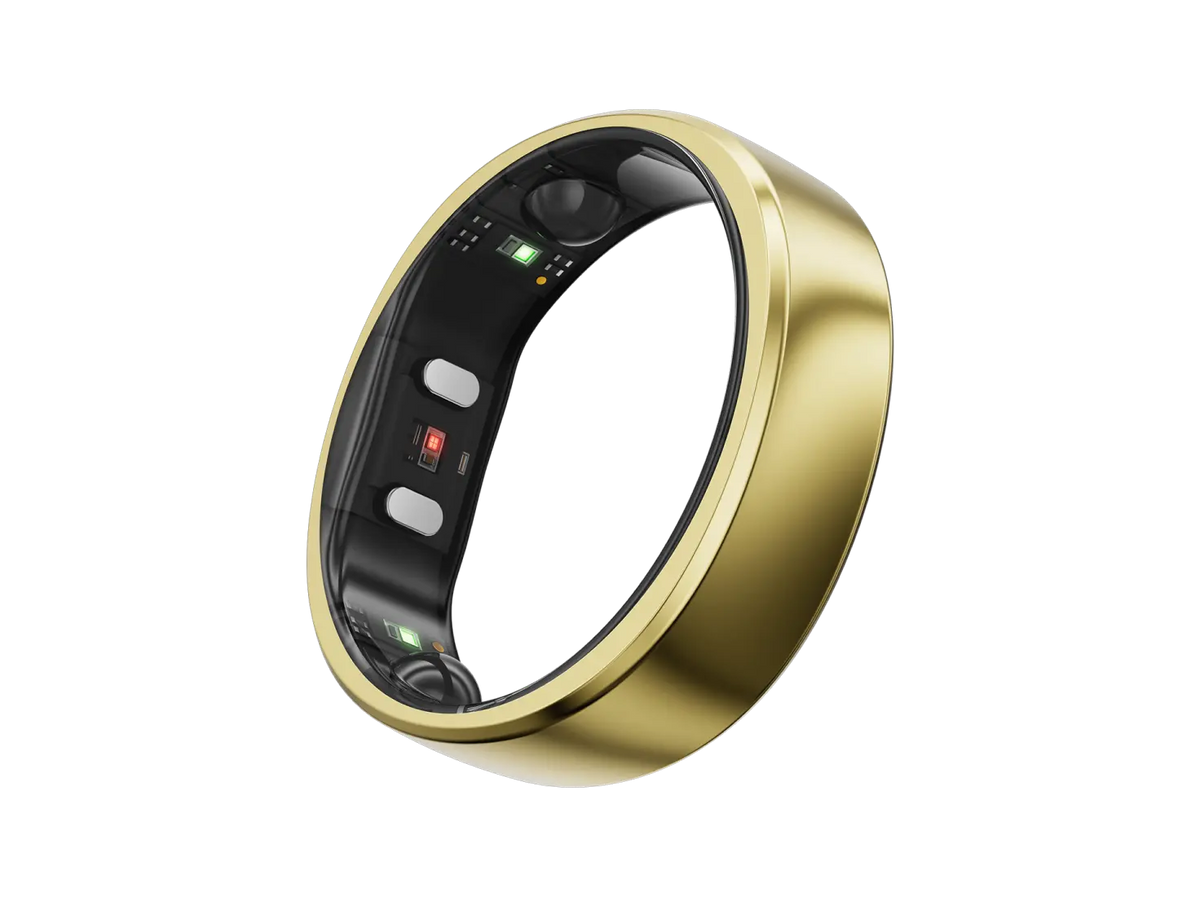 RingConn Gen 2 | Previous generation, still sold. Broad sleep/vital tracking; comparable independent peer-reviewed Gen 2 HRV validation was not located in this review. | 10–12 days | None | Check on Amazon |
 RingConn Gen 2 Air | Core sleep and vital tracking; comparable independent peer-reviewed Gen 2 Air HRV validation was not located in this review. | Up to 10 days | None | Check on Amazon |
| Ultrahuman Ring Pro | Validation data is mainly company-generated, with small samples; not equivalent to large independent peer-reviewed evidence. Replaces the Ring AIR, which is not currently sold in the US. | Several days per charge; charging case adds up to 45 days | No mandatory subscription (optional paid add-ons) | Check on Ultrahuman |
Our picks in detail
No subscription · longest battery
RingConn Gen 3
The full feature set with no membership and the fewest charging gaps in your sleep data.
- Up to 14 days per charge (10–12 with vibration alerts on)
- HRV, SpO₂, skin temperature and sleep-apnea risk indicators
- Comparable independent peer-reviewed Gen 3 HRV validation not located yet
Most independent research
Oura Ring 5
For data-minded users who value independent validation and a polished app, and accept a membership fee.
- Most published independent research of the rings compared (mostly on earlier generations)
- About 1 week per charge
- Membership needed for full insights
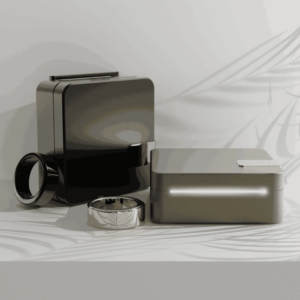
No mandatory subscription · charging case
Ultrahuman Ring Pro
For people who want coaching prompts and a charging case in the box.
- No mandatory subscription for core data (optional paid add-ons)
- Charging case adds up to 45 days of power
- Validation data is mainly company-generated, with small samples

Budget · no subscription
RingConn Gen 2 Air
A lower-cost, slimmer way into ring-based sleep tracking, still with no subscription.
- Up to 10 days per charge
- Core sleep, heart rate, HRV and SpO₂ tracking
- No vibration alerts (a Gen 3 feature)
Affiliate links: BioRestLab may earn a commission from qualifying purchases made through some links on this page, including as an Amazon Associate, at no extra cost to you.
What makes a smart ring useful for sleep and recovery?
For this use case, the most relevant features are comfortable overnight wear, sleep and wake detection, resting heart rate, heart-rate variability (HRV), temperature trends, battery life, data continuity and the quality of the accompanying app. These measurements should be treated as trends rather than medical diagnoses.
The five criteria we use
- Sleep tracking: look beyond the number of sleep stages and consider consistency, sleep timing and overnight trends.
- Recovery metrics: check which metrics are measured directly and which are proprietary scores derived from several inputs.
- Comfort: a technically capable ring is less useful if you stop wearing it at night.
- Battery and charging: frequent charging can create gaps in longitudinal data.
- Total cost: include the ring, subscription and any required accessories over several years.
Smart ring vs smartwatch for recovery
A ring generally emphasizes passive, low-distraction monitoring and overnight comfort. A smartwatch may provide a broader training ecosystem, GPS, workout functions and on-device feedback. Neither form factor is automatically better for every user.
Which metrics deserve the most attention?
For recovery, trends in resting heart rate, HRV, sleep duration and sleep timing can be more useful than a single daily score. A sudden change can have many explanations, including training load, alcohol, illness, stress or a disrupted night. The device cannot establish the cause by itself.
Subscription cost matters
Compare the total cost over at least three years. A lower purchase price can become more expensive if important historical data or advanced analysis requires a recurring subscription.
How accurate are smart rings?
Consumer wearables can be useful for longitudinal tracking, but accuracy varies by device, metric and testing conditions. Sleep-stage classification is generally more difficult than basic sleep/wake detection, and wearable HRV should not be treated as equivalent to a clinical ECG measurement.
Our comparison framework
| Criterion | What to check | Why it matters |
|---|---|---|
| Sleep | Sleep/wake detection, duration, trends | Overnight continuity |
| Recovery | HRV, resting heart rate, temperature | Longitudinal context |
| Comfort | Fit, weight, sizing | Consistent wear |
| Battery | Real-world charging requirements | Fewer data gaps |
| Cost | Hardware + subscription | Total ownership cost |
Best smart ring for you: start with the use case
If sleep and passive recovery are your priorities, prioritize comfort, battery life and useful longitudinal data. If you also want detailed workouts, GPS and broader smartwatch functions, compare a ring against a smartwatch rather than assuming a ring is the better solution.
Smart rings for sleep and recovery: FAQ
Which smart rings work without a subscription?
RingConn Gen 3, Gen 2 and Gen 2 Air have no subscription, and the Ultrahuman Ring Pro has no mandatory subscription for its core ring data. Samsung’s Galaxy Ring also has no subscription but works only with Android phones. See our full guide to smart rings without a subscription. Oura requires a paid membership for full insights, so add that cost when you compare prices over two or three years.
Which smart ring is best for athletes who want to spot overtraining?
No ring can diagnose overtraining. What a ring can do is show sustained changes in resting heart rate, HRV and sleep against your own baseline, which is a useful prompt to review training load. Oura has the most published independent research; RingConn’s longer battery means fewer gaps in the overnight data. If you also need GPS and workout tracking, compare against a sports watch.
Which ring gives the simplest, easiest-to-understand scores?
All three brands summarise the night in a single sleep or readiness score, so simplicity mostly comes down to the app. The score is a proprietary combination of several measurements, not a clinical value. Look at the trend over weeks rather than reacting to one day’s number.
Can a smart ring share sleep data with health apps or my doctor?
Most ring apps can sync selected data with phone health platforms and export reports, but which metrics are shared varies by brand and phone, so check the current integrations before you buy. A ring is a consumer wellness device: a clinician may find your trends useful context, but they are not a substitute for a medical sleep test.
Where is the best place to buy a smart ring?
Buy from the manufacturer or an authorised retailer that offers a sizing kit or easy size exchanges, because a poor fit affects both comfort and sensor readings. Compare the return window and warranty as well as the price.
Related BioRestLab guides
- Best Smart Rings Without a Subscription
- Oura vs RingConn vs Ultrahuman
- What to Look for in a Recovery Wearable
- How Sleep Affects Muscle Recovery: The Science Explained
- BioRestLab Rating Methodology
Sources and limitations
Product specifications, prices, compatibility and availability are time-sensitive. BioRestLab treats manufacturer specifications as product information, not as independent evidence of accuracy. For health-related claims, the article distinguishes peer-reviewed validation from manufacturer-funded testing. Last product information check: October 11, 2026 (updated for RingConn Gen 3 and Ultrahuman Ring Pro US availability).
- Peer-reviewed 2025 validation study of consumer wearables against ECG
- Systematic review and meta-analysis of Oura sleep measurements
- Oura Ring 5 official specifications and membership information
- RingConn official product comparison
- RingConn Gen 2 Air official specifications
- RingConn Gen 3 official specifications
- Ultrahuman Ring Pro official page
- US International Trade Commission (investigation of smart rings, Oura v. Ultrahuman and RingConn)
Medical limitation: Smart rings are consumer wellness devices. Their measurements and recovery scores should not be used as a diagnosis or as a substitute for professional medical evaluation.