
Recovery wearables (rings, bands and watches that track sleep, heart rate variability (HRV), resting heart rate and activity) can help you understand trends in sleep and training. They do not directly measure “recovery”, and readiness scores should be treated as wellness indicators, not medical measurements.
This guide explains what these devices actually measure, how to choose between a smart ring, smartwatch and recovery band, and which features are worth paying for.
Choose the device that fits the decision you want to improve. Prioritize consistent overnight data, comfortable continuous wear, HRV and resting-heart-rate trends, reliable sleep/wake tracking, good battery life and transparent total cost. For sleep-focused tracking, a comfortable ring is often easiest to wear every night; if you also want GPS, workouts and notifications, a smartwatch may suit you better. A device you actually wear consistently is more useful than one with a longer list of metrics.
What recovery wearables actually measure
Depending on the device, sensors collect heart rate, HRV, movement, skin temperature, blood-oxygen estimates and other signals. Algorithms then estimate sleep stages, readiness or recovery. These scores are derived estimates: accuracy varies with device design, sensor placement, movement, skin contact and the algorithm used. Compare the quality and consistency of the underlying measurements rather than the number of metrics advertised.
A recovery score is a model output, not a direct measurement of how much your muscles, nervous system or tissues have recovered. It is most useful when you compare today’s data with your own baseline.
Smart ring, smartwatch or recovery band?
| Type | Best suited to | Main trade-off |
|---|---|---|
| Smart ring | Sleep, passive health and recovery tracking; comfortable overnight wear | Small interface; some models require a subscription for full insights (see smart rings without a subscription) |
| Smartwatch | Workouts, GPS, notifications and everyday use | Larger, less discreet overnight and usually needs more frequent charging |
| Recovery band | Training and recovery trends | Fewer general smartwatch functions |
Smart rings: what to check
Check ring sizing, comfort, battery life, charging method, phone compatibility, data access and subscription requirements, and whether the measurements you care about are available in your country and on your phone’s operating system. For specific models, see our smart ring comparison.
Smartwatches for recovery
A smartwatch makes more sense when recovery tracking is only one part of what you need. If overnight comfort is the priority, compare weight, thickness and battery life rather than assuming a more expensive watch provides better recovery information.
Sleep tracking: what matters most
If sleep is your main reason for buying, start with comfort and consistency. A device that is uncomfortable or needs frequent charging produces less useful data simply because you stop wearing it. Wearables estimate sleep stages from movement, heart-rate signals and other sensors; these estimates help identify patterns but are not equivalent to a clinical sleep study, and sleep-stage classification is less reliable than basic sleep/wake detection.
HRV and resting heart rate: trends, not verdicts
Heart rate variability describes variation in the intervals between heartbeats. Repeated measurements under similar conditions are more informative than a single unusually high or low value. Training load, sleep, illness, alcohol, travel and stress all influence HRV and resting heart rate, so interpret changes in context. A useful personal baseline can take several weeks to establish.
| Metric | Useful question | Important limitation |
|---|---|---|
| Sleep duration | Am I consistently allowing enough time for sleep? | Does not describe every aspect of sleep quality. |
| Resting heart rate | Has my usual baseline changed? | Influenced by many factors outside training. |
| HRV | Has my personal trend changed under similar conditions? | Highly variable and device-dependent. |
| Activity / training load | Has my recent workload changed? | Algorithms and definitions differ by device. |
| Recovery score | Does the combined trend match other signals? | An algorithmic estimate, not a direct measurement. |
Accuracy, subscription and privacy
Accuracy: consumer wearables are useful for longitudinal tracking, but results vary by device, person and metric, and wearable HRV can differ from ECG-based reference measurements. Look for independent validation for the metric you actually care about.
Total cost: compare the three-year cost, not only the purchase price. Add subscriptions, replacement bands or chargers and the likely replacement cycle. A device with no recurring fee can be cheaper over time even if it costs more upfront; the reverse can also be true.
Privacy: check what health data is collected, where it is processed, whether it can be exported or deleted, which third parties receive it and what happens to your history if you stop paying for a subscription.
A practical buying checklist
- Define the main question you want the device to help you answer: sleep, recovery, training or general health.
- Check which metrics are available without a subscription.
- Compare overnight comfort and real-world battery life, including charging time.
- Confirm compatibility with your phone and health ecosystem.
- Look for independent evidence for the measurements that matter to you.
- Compare total three-year cost.
- Decide whether you need a screen, GPS, notifications or workout functions.
- Check data export, deletion and sharing policies.
Compare recovery wearables
Once you know which form factor fits, compare current options by sensors, comfort, battery life and total cost, not marketing claims. If a ring fits you best, see our smart ring comparison. These are the two rings we link most often; use the brand’s sizing kit before choosing a size.
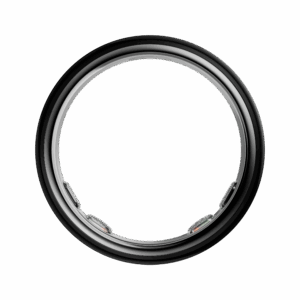
Most independent research
Oura Ring 5
- Most published independent research
- Membership required for full insights
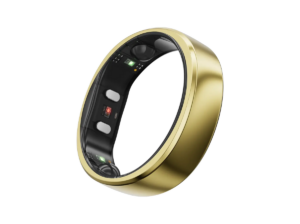
No subscription
RingConn Gen 2
- No subscription
- Longer battery
As an Amazon Associate, BioRestLab earns from qualifying purchases.
What a recovery score cannot tell you
A readiness or recovery score cannot diagnose an injury, determine the cause of pain or prove that you are physiologically “recovered”. Use it as one input alongside sleep, training load, symptoms and how you actually feel, and look for sustained trends rather than reacting to every daily fluctuation. Wearable data should not replace clinical evaluation when symptoms are persistent, severe or concerning.
How BioRestLab evaluates recovery wearables
We assess evidence base, measurement transparency, build quality and durability, comfort and usability, value for money, safety and certifications, privacy and brand trust. We distinguish manufacturer claims from independently published evidence and do not claim hands-on testing unless a product has actually been tested. See our Rating Methodology.
Leaning towards a ring? Compare specific models on sleep and HRV evidence, battery life and subscription cost in our best smart rings for sleep and recovery guide.
Related BioRestLab Guides
Sources and Further Reading
- 2026 systematic review and meta-analysis of wearable sleep tracking versus polysomnography
- 2024 living umbrella review of consumer wearable measurement accuracy
- 2025 validation study of nocturnal resting heart rate and HRV in consumer wearables
- 2025 meta-analysis of consumer wrist-worn sleep trackers versus polysomnography
This article is for general educational purposes and is not a substitute for professional medical advice. Wearable scores are not diagnostic tools.